Dubai to Qatar shipping in 2026: what shippers actually need
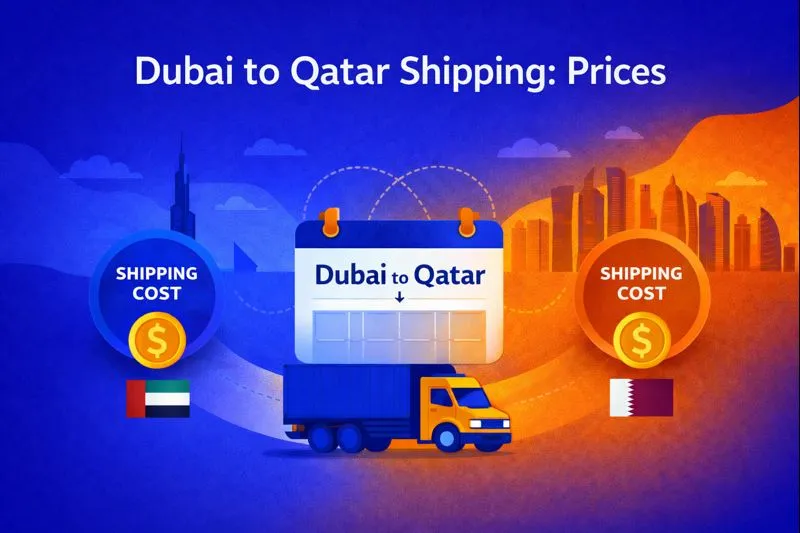
If you are searching for a Dubai to Qatar shipping company, you are usually trying to answer three practical questions: what is a realistic cost range, which transport mode fits your cargo, and how to avoid delays at the border. That is exactly what this guide covers—without marketing fluff or misleading “starting from” prices that exclude half the scope.
Dubai→Qatar movements can be straightforward when documentation, packaging, and routing are planned correctly. But many delays come from small operational gaps: unclear invoice descriptions, incorrect HS codes, missing COO when needed, or a quote that ignores border waiting and last-mile constraints. This article explains how to ship with predictable outcomes and fewer surprises.
Shipping prices from UAE to Qatar: what determines total cost?
There is no single price that applies to every shipment. Rates change with seasonality, capacity, and border flow. What stays consistent is the cost structure. Your total cost is typically driven by:
- Shipping mode: road freight (FTL/LTL), air cargo for urgent commercial loads, or courier for small parcels.
- Chargeable weight/volume: pallets, CBM, gross weight, and volumetric calculations (especially for express).
- Destination in Qatar: Doha and nearby industrial zones differ from longer-haul or specialized delivery points that require permits or timed access.
- Cargo type: general cargo vs temperature-controlled, restricted items requiring approvals, or oversized/project cargo.
- Customs readiness: HS code accuracy, consistent invoice + packing list, COO requirements (when applicable), and controlled-goods paperwork.
- Service scope: door-to-door vs depot-to-depot, loading/unloading, waiting time, special handling, and delivery time windows.
Operationally, the biggest price disputes come from scope ambiguity. Before you compare offers, confirm whether the quote includes border handling, waiting time, any export/import support required for your shipment, and final delivery conditions (forklift availability, offloading method, access restrictions, and delivery appointment rules).
Seasonal factors that impact UAE to Qatar shipping
Seasonality affects more than demand. It changes border staffing patterns, consignee receiving windows, trucking availability, and loading cut-offs. Planning around peak periods is one of the simplest ways to protect transit time and cost stability.
- Ramadan: Working hours shift across many operations—warehouses, receivers, and administrative steps. Loading schedules tighten, and deliveries may need appointments earlier in the day. Plan pickups earlier and build buffer time for border and receiver availability.
- Eid periods: Expect a pre-holiday surge, tighter capacity, and occasional pauses on the consignee side. If you must ship close to Eid, a dedicated truck (FTL) generally provides more control—only if documents are locked before dispatch.
- Holiday rush and year-end peaks: Retail, promotions, and project cargo can increase sharply, causing rate volatility. Book equipment earlier, confirm consignee receiving slots, and avoid dispatching on the last working day before long breaks.
- Weather-related impacts: Extreme heat does not stop trucks, but it can affect loading speed, warehouse productivity, and temperature-sensitive handling. For sensitive goods, confirm packing standards and any temperature-control requirements before booking.
Practical planning rule: if your shipment is tied to a strict deadline (site shutdown, installation date, or customer delivery SLA), do not leave dispatch to the final day. The cost of a missed deadline usually exceeds the difference between LTL and FTL.
Dubai to Doha shipping: why road freight is usually the default
For most commercial cargo, road freight remains the default option because it balances speed, control, and cost. It supports palletized loads, regular replenishment shipments, and many B2B deliveries with predictable workflows when documents are correct.
Road freight also allows operational control: pickup time, securing method, and delivery scheduling can be tailored to your cargo type. For repeat shipments, standardizing invoice descriptions, HS codes, and packing methods quickly reduces surprises and stabilizes lead times.
Border crossings used: main UAE–Qatar routes
For UAE→Qatar road cargo, routing is influenced by the current cross-border corridor and operational conditions. In practice, the movement typically involves transiting through KSA corridors before entering Qatar. The key point for shippers is not memorizing every checkpoint, but understanding what changes at each stage:
- Primary corridor routing: Transit planning must account for driving hours, rest requirements, and inspection probability based on cargo type and documentation quality.
- Inspection patterns: Well-documented general cargo tends to clear faster. Mixed descriptions, inconsistent weights, or unclear item lines increase the chance of secondary checks.
- Delivery access rules: Industrial zones and major receivers may require prior appointment, driver details, and specific vehicle types. Route planning must include consignee access constraints, not just border distance.
Operational takeaway: for cross-border road shipments, documentation quality is the biggest lever you control. When invoice and packing list match exactly, HS codes are accurate, and required supporting documents are ready, you reduce border uncertainty dramatically.
FTL vs LTL trucking: which one should you choose?
FTL (Full Truckload) is a dedicated truck for your shipment. It offers faster dispatch, fewer handling points, and stronger control—ideal for urgent, high-value, or sensitive goods. LTL (Less-than-Truckload) consolidates multiple shippers. It is cost-efficient for small volumes, but depends on consolidation schedules and introduces extra handling.
| Criteria | FTL | LTL | Best For |
|---|---|---|---|
| Cost | Higher total; better value per unit at larger volumes | Lower total for small shipments | FTL: large volume / deadlines; LTL: 1–6 pallets |
| Transit Time | More predictable; direct dispatch | Depends on consolidation and hub schedule | FTL for fixed delivery dates; LTL for flexible windows |
| Cargo Security | No mixing; highest control | Shared space; requires strict securing | FTL for high-value / fragile / sensitive cargo |
| Handling Points | Minimal handling | More handling (cross-dock / consolidation) | FTL when damage risk must be minimized |
| Flexibility | High flexibility in dispatch timing | Moderate; aligned with group schedule | FTL for strict receiving slots |
| Control | Highest control over route and timing | Shared control; priority depends on network | FTL for operational certainty |
Cost breakdown example (ranges, not fixed prices)
Below is a realistic framework that shows how total cost changes by mode. These are approximate ranges, not exact prices, because final pricing depends on season, truck availability, delivery constraints, and scope.
Scenario: 5 standard pallets from Dubai to Doha (general cargo), door-to-door delivery, documents ready, normal working days.
- LTL (shared truck): Usually the most cost-efficient for 1–6 pallets. The range is driven by consolidation timing, number of handling points, and last-mile delivery complexity. It works best when you can accept a planned delivery window rather than a fixed date.
- FTL (dedicated truck): Higher total cost, but faster dispatch and stronger control. The range is driven by truck type, pickup and loading time, waiting exposure, and delivery restrictions at the consignee site. This is generally the best option for deadlines, sensitive cargo, or strict appointment deliveries.
- Express courier: Best for urgent small parcels (documents, samples, critical spare parts). For pallets, courier becomes expensive quickly due to volumetric weight rules and piece-count pricing. For 5 pallets, courier is rarely the right answer unless the shipment is split into small parcels with extreme urgency.
Pricing becomes more predictable when scope is explicit: Who covers export-side requirements? Who manages border coordination? Is waiting time included if inspection occurs? Who arranges offloading at delivery? A quote is only “cheap” if it includes the same scope as the alternatives.
Typical transit times: Dubai to Doha and major zones
- Doha / nearby industrial areas: transit is typically planned in a short operational window once dispatched, but actual delivery time depends on border processing and receiver readiness.
- Specialized deliveries: deliveries requiring timed access, permits, or controlled handling can add lead time. The more constrained the delivery environment, the more you benefit from dedicated planning.
Transit estimates are only reliable when documents are clean. Inconsistent item lines, HS code ambiguity, or missing supporting paperwork can introduce delays that are avoidable with a proper pre-dispatch document check.
Air freight vs road freight: when air makes sense
Some shippers default to air when they hear “urgent.” In practice, air freight can be appropriate for high-value, time-critical goods that are small enough to justify the premium. However, air still requires correct paperwork and can introduce its own handling and cut-off constraints.
If your shipment is palletized and heavy, road freight often remains the most sensible balance between cost and operational control. The right decision comes from clarifying urgency, shipment size, and consignee receiving requirements.
Express courier services in Qatar: when courier beats freight
For urgent parcels, express courier Qatar is ideal for documents, samples, and small spare parts. The key operational point is volumetric weight: a light but bulky parcel can be charged as if it is heavy.
If you ship small parcels frequently, courier can be integrated into your replenishment workflow. If your cargo is palletized, LTL or FTL typically provides better cost control and fewer handling risks.
How to choose the best Dubai to Qatar shipping company (practical checklist)
- Quote clarity: confirm inclusions and exclusions (border handling, waiting, last-mile surcharges, delivery appointment requirements, special handling, and offloading method).
- Customs competence: the operator should pre-check invoice descriptions, HS codes, supporting documents, and consignee readiness before dispatch.
- Equipment suitability: ensure the correct vehicle type and securing method (box, curtain-sider, reefer, flatbed/low-bed) to match cargo risk.
- Tracking and updates: you should receive operational milestones (pickup, border stage, release, delivery) rather than generic “in transit” messages.
Red flags to watch
- Unusually low prices: often indicates exclusions that will appear later as add-ons (waiting, delivery constraints, border handling, or rework).
- No transparency on responsibility: if they cannot explain who handles documentation support and who resolves border queries, delays become likely.
- No tracking system: “we will update you” is not tracking. Lack of visibility usually signals weak operational control.
- Vague insurance terms: unclear coverage limits and claims steps transfer risk to you in case of damage or shortage.
Common mistakes that cause border delays
1) Incorrect HS codes or vague product descriptions
Why it happens: Shippers reuse an old HS code from a different product, or they write generic lines like “spare parts” without technical detail. Customs cannot validate the nature of the goods from vague descriptions, which triggers classification questions.
Consequences: The shipment may be held for clarification, re-classified, or moved to inspection—adding time and sometimes extra charges.
How to avoid it: Use precise item descriptions and confirm HS codes before dispatch, especially for regulated or sensitive categories.
2) Invoice value mismatch or inconsistent paperwork
Why it happens: Last-minute quantity changes, partial shipments, or packing updates are not reflected across all documents. Sometimes the packing list differs from what is actually loaded due to operational pressure at the warehouse.
Consequences: Border processing slows down, and clearance can stall until documents are corrected and reconciled.
How to avoid it: Lock the document pack after final packing and reconcile quantities, weights, and item lines against the physical load before the truck departs.
3) Missing supporting documents when required
Why it happens: Some shippers assume supporting documents are optional or they request them late, especially during peak seasons. Administrative steps can become slower during holidays and shifted working hours.
Consequences: The shipment can be held until compliant paperwork is issued, corrected, or validated.
How to avoid it: Confirm document requirements at booking stage and prepare them before pickup—not at the border.
4) Shipping restricted items without approvals
Why it happens: Items such as certain chemicals, controlled electronics, or specialized goods may require permits or specific handling. Problems happen when the cargo is treated as “general” to save time, or when the shipper is unaware of restrictions.
Consequences: Holds, penalties, forced returns, or disposal actions may occur—creating major cost exposure and operational disruption.
How to avoid it: Declare cargo accurately and secure required approvals before dispatch. If unsure, consult before pickup and do not guess.
FAQ (English)
How much is shipping from UAE to Qatar?
It depends on mode (FTL/LTL/courier/air), volume, cargo type, and destination. Share shipment details to receive an accurate cost range.
Is road freight from Dubai to Qatar suitable for pallets?
Yes. For palletized commercial cargo, road freight via LTL or FTL is typically the most practical solution.
When should I choose express courier?
Courier is best for small urgent parcels such as documents, samples, or critical spare parts. For pallets, LTL or FTL usually offers better cost control.
What is the biggest cause of delays?
Document issues: unclear product descriptions, incorrect HS codes, inconsistent invoice/packing list, or missing supporting paperwork.